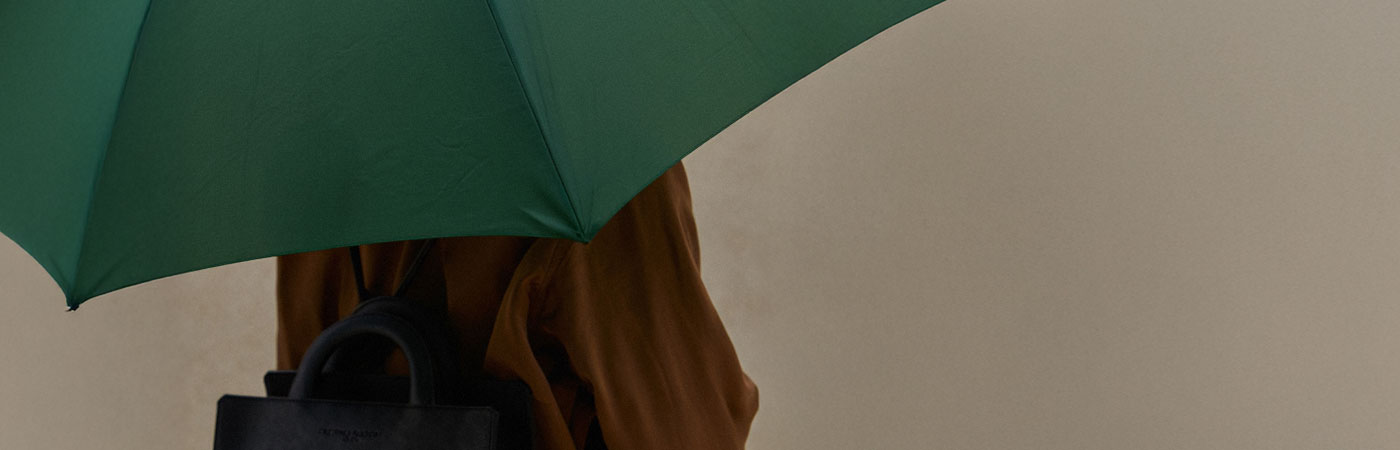
The future is PFAS-free –
and we’re leading the way.
Despite this, PFAS have long been used to make fabrics, including umbrella canopies, water-repellent.
We’ve made a different choice.
At AD company, we have worked closely with our manufacturing partners for several years to replace PFAS-based treatments. Today, our entire umbrella range is made without intentionally added PFAS.
We are taking action now – without waiting for a general ban on PFAS.
What are PFAS?
PFAS are a group of more than 10,000 per- and polyfluoroalkyl substances. They have been used in everything from textiles and rainwear to non-stick cookware and cosmetics because of their water-, grease- and stain-repellent properties.
Some PFAS have been linked to effects on the immune system, elevated cholesterol levels and an increased risk of certain cancers. Several substances are already restricted or banned in the EU, and further regulations are being developed.
How do our umbrellas work without intentionally added PFAS?
We use an alternative water-repellent treatment and test the fabric’s performance according to AATCC 22. The results show that we can achieve the level of water repellency we require without PFAS-based treatments.
However, this also places greater demands on manufacturing. The fabrics can be more sensitive to dirt and oil stains, requiring careful handling, cleanliness and quality control.
Chemical control – beyond PFAS
Chemical legislation is extensive, and the issues are often complex. That is why we work with an external chemical expert who helps us interpret regulations, make assessments and stay up to date as requirements change.
Our chemical control programme is based on regulations including the EU’s REACH Regulation and the POPs Regulation, but we go beyond simply meeting legal requirements. We carry out risk assessments and also test for selected substances that are not yet subject to legal restrictions.
By setting our own requirements for suppliers and conducting independent laboratory tests, we work systematically to check that our products meet both applicable chemical regulations and our own specifications.
Recycled polyester in our umbrella canopies
Our umbrella canopies are made from 100% recycled polyester (rPET) sourced from post-consumer materials. We calculate our products’ carbon footprints in accordance with the international GHG Protocol standards to understand their climate impact and provide a better basis for our material choices and our ongoing efforts to reduce our carbon footprint.
Control throughout the supply chain
We set requirements for product quality, chemical management and working conditions at our manufacturing partners. Through regular factory visits, we can inspect operations firsthand and see how our requirements are being met. This work is complemented by independent social compliance audits.
For several years, we have also been mapping our supply chain, from our manufacturing partners back towards the origins of the raw materials. This gives us a better understanding of where materials come from and how our products are made.
The EU’s new Packaging and Packaging Waste Regulation (PPWR) also introduces additional requirements for packaging materials, design and documentation. Our traceability work helps us collect and follow up on relevant information.
A conscious decision
Replacing PFAS-based treatments is a concrete step in our chemical management efforts. Through continued testing, follow-up and development, we work to maintain control over our products and how they are manufactured.
The future is PFAS-free. We’re not waiting.